

Integrative Wellness · Meditation
Settle your nervous system, one breath at a time.
Simple, practical meditation guided by Cheri Sacks, RN — no experience needed, no pressure, ever. A gentle way to lower stress, sleep better, and steady your mind while living with a chronic condition.
Stress · Sleep · Focus · Judgment-free
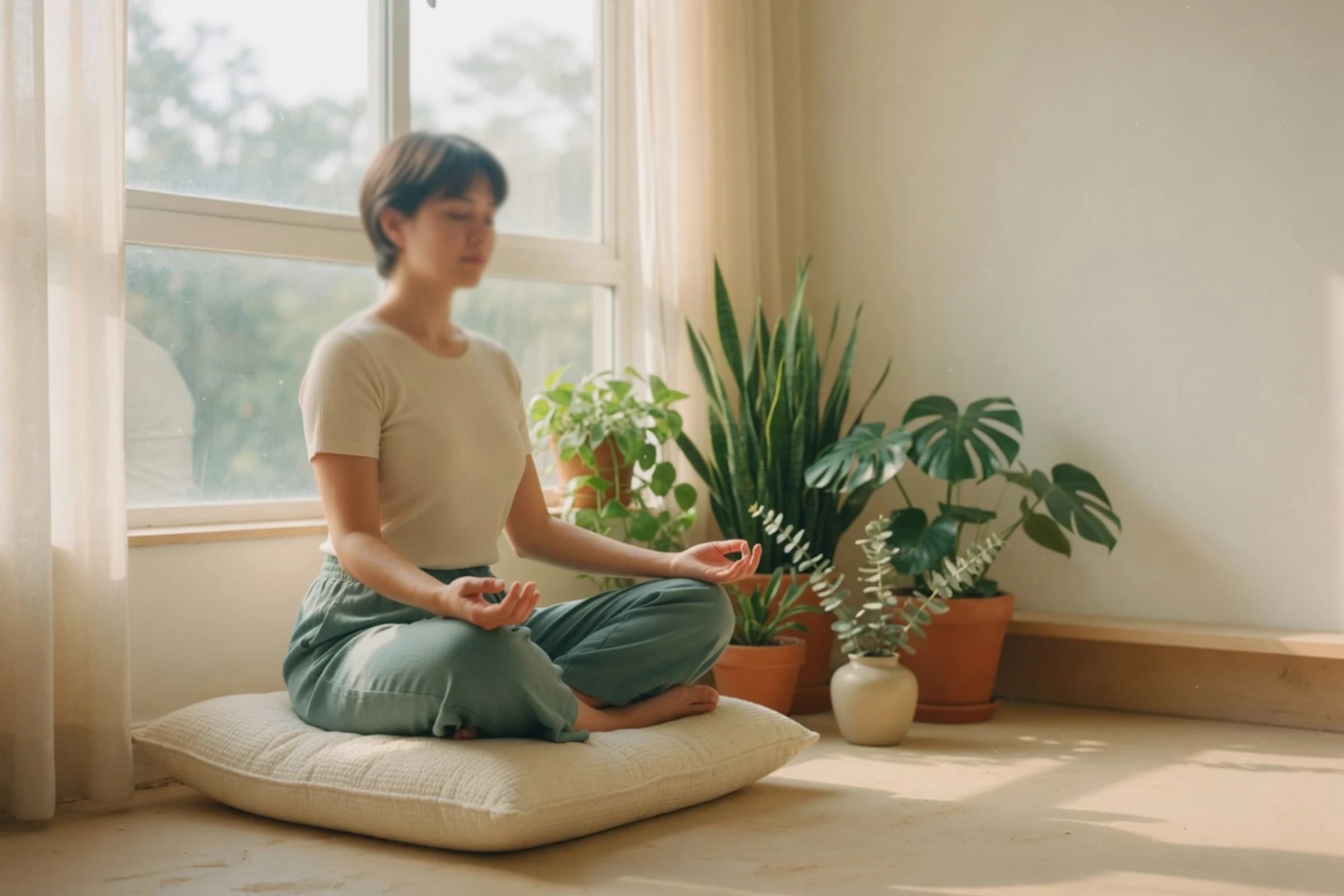 Practice in Sanctuary
Why meditation
Rest is medicine
When you’re living with a chronic condition, your body can get stuck in a low-grade “fight or flight” state — muscles tight, mind racing, sleep in pieces. Meditation is one of the simplest ways to signal safety to your nervous system, shifting you toward the “rest and digest” state where your body recovers.
You don’t need to empty your mind or sit cross-legged for an hour. As a Registered Nurse and health coach, Cheri teaches short, doable practices — a few mindful breaths, a body scan, a moment of quiet before a meal — that fit real life. Meditation won’t replace your medical care, but many people find it eases stress, softens pain perception, and makes the rest of their day feel more manageable.
The P.A.T.H. to wellness
Is this the right door for you?
Walk the P.A.T.H. — Personalized, Awareness, Transformation, Health. If you’ve already placed yourself, open Your PATH in the portal to update anytime.
Continue exploring



Simple ways to start
Practices you can try today.
Three slow breaths
Before you get out of bed or start a task, take three slow breaths with a longer exhale. A tiny reset that tells your body it’s safe to settle.
A one-minute body scan
Notice your feet, shoulders, and jaw, and let each soften. A gentle way back into your body when your mind is spinning.
Anchor to something ordinary
Sip tea, wash your hands, or walk to the mailbox with full attention. Everyday moments become built-in meditation.
Pair it with a habit you already have
Attach one mindful minute to an existing routine — coffee, meds, brushing teeth — so the practice sticks without extra effort.
You don’t have to quiet your mind to meditate. You just have to keep coming back to this breath, gently, without judgment.
Cheri Sacks, RN, CDCES · Integrative Nurse Coach
Where this fits
Part of your whole-person path
Meditation is one pillar of integrative wellness at Chronic Health Wisdom — it pairs beautifully with Reiki for deep rest and with gentle movement for steady energy. If stress is tied to a diagnosis, one-on-one health coaching or condition support can weave these settling practices into a plan built around your body.
Prefer to practice on your own between sessions? Explore the Sanctuary tools on this site for guided breathing and grounding whenever you need a reset.
The Meditation Starter Guide
Short, doable practices you can try today — a free guide to settling your nervous system, one breath at a time.
Common questions
Meditation, answered
Answered by Cheri Sacks, RN — a Registered Nurse and integrative health coach in the San Francisco Bay Area.
Yes. Regular, gentle meditation helps settle the nervous system and can ease the stress, worry, and tension that often come with a chronic condition. It works by shifting you out of “fight or flight” toward a state where your body rests and recovers. Cheri, a Registered Nurse in the Bay Area, teaches it as a complement to — not a replacement for — your medical care.
Absolutely. A racing mind is normal and not a sign you’re “bad” at meditation. The practice isn’t about stopping thoughts — it’s about noticing when you’ve drifted and gently returning to your breath. Cheri starts beginners with just one minute at a time, so it feels doable from day one.
Many people notice a quieter, steadier feeling after just one to five minutes, and consistency matters more than length. A short daily practice tends to help more than a long, occasional one. Cheri often suggests starting with two or three minutes attached to a habit you already have, then growing from there.
Often, yes. A short wind-down meditation or slow-breathing practice before bed can quiet a busy mind and prime your body for sleep. It won’t fix every sleep problem — and ongoing insomnia is worth discussing with your doctor — but many of Cheri’s clients find an evening practice helps them fall asleep more easily and wake less.
For most people meditation is gentle and helpful, but if you live with depression, trauma, or panic, some practices can feel activating at first. Start short, keep your eyes open if that feels safer, and stop if you feel overwhelmed. Meditation supports professional mental-health care — it doesn’t replace it. Cheri, as an RN, will help you choose grounding, body-based practices and encourage you to keep working with your therapist or provider.
Meditation is the broader practice of training gentle, present-moment attention. The Sanctuary tools on this site — like guided breathing and grounding exercises — are quick, self-guided ways to practice it in the moment. Use the tools on your own anytime, and bring what you notice to a coaching session with Cheri to build a practice that fits your life.
From Cheri’s desk
Rest & nervous system
Sleep, stress, and gentle practices that support recovery.

Local
Health Coaching in San Jose, for People Who Work the Hours Everyone Else Sleeps Through
Nurse coaching in San Jose for shift work, long commutes, and real households. Cheri Sacks, RN, CDCES.
Read
Diabetes
Type 2 Diabetes and Sleep: The Overlooked Link
How sleep and blood sugar affect each other, when to ask about apnea, and a kinder bedtime. Cheri Sacks, RN, CDCES.
Read
Diabetes
Holiday Eating With Diabetes, Without the Stress
A nurse's holiday table plan: medicines, the diabetes plate, a 10-minute walk, and no shame. Cheri Sacks, RN, CDCES.
Read
Ready for a free chat?